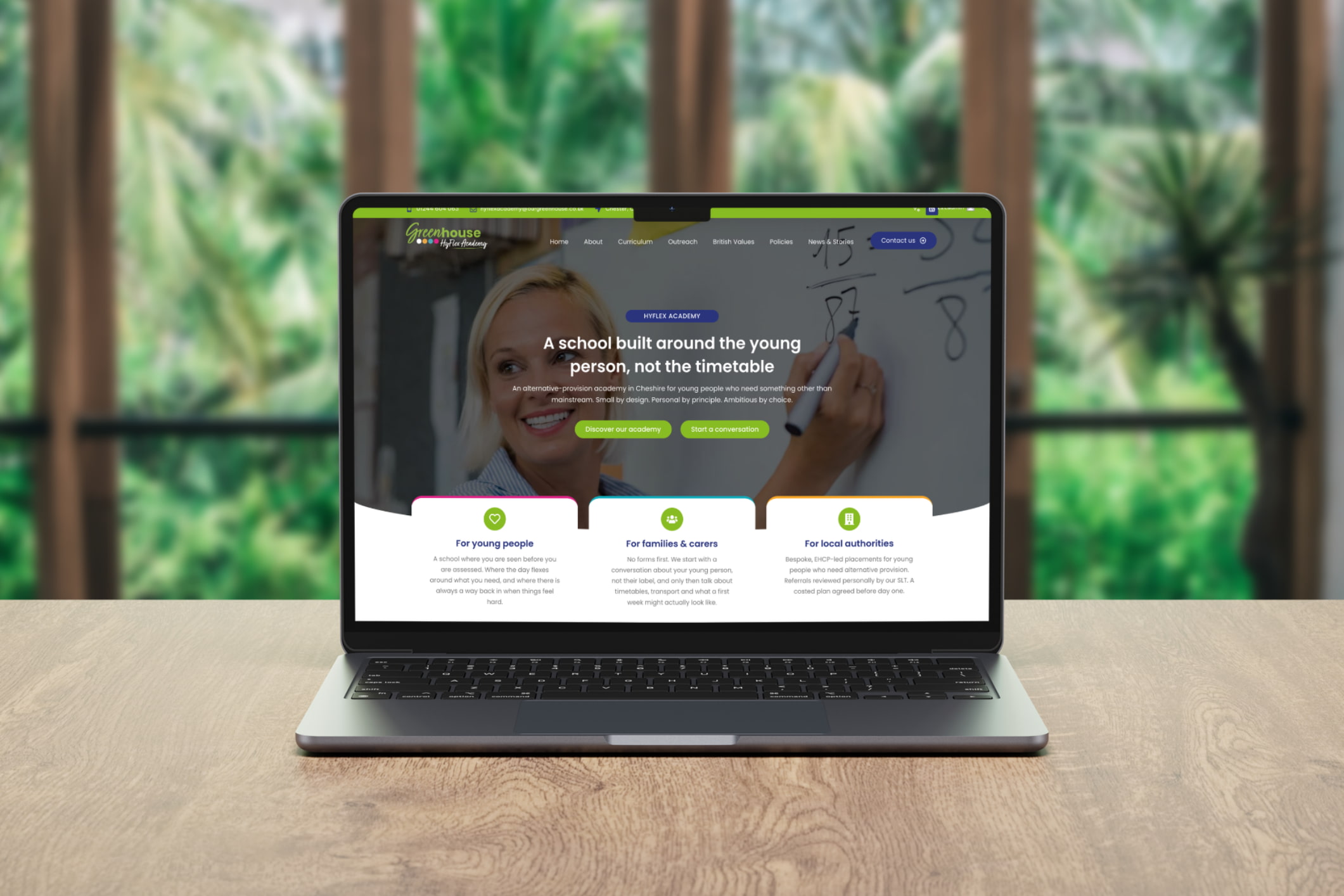

Until now, our Chester Education Centre has been the whole story: a place for young people whose needs go beyond what mainstream school can hold. We’re proud of that work, and it isn’t changing. But we’ve always known that some young people don’t need a full alternative placement, they need the right support, early, before things get to that point. So we’ve extended our offer to meet them there too.
Our Outreach service now runs alongside HyFlex Academy as a single, graduated pathway: three tiers, one framework, one accountable route from a first concern through to a genuine destination.
Why we built it this way
Nearly one in five pupils are now persistently absent from school, and severe absence has almost tripled since before the pandemic. In a typical 1,000-pupil secondary, that’s around 181 pupils, 73 more than before 2020. The drivers are usually anxiety, trauma, unmet SEND or family stress, not defiance. Absence is a distress signal, not a discipline problem, and it deserves a response built on that understanding rather than against it.
The cost of getting this wrong compounds quickly, for the young person and for the system around them. Each additional day of absence between Years 7 and 11 is linked to around £750 in lower lifetime earnings, and a persistently absent pupil can go on to earn roughly £10,000 less by age 28 than a classmate with near-perfect attendance. This is exactly where a graduated, evidence-led model earns its place: not a single response, but the right level of intervention at the right time.
Three tiers, one accountable pathway
Tier 1 – Prevent, is a 12-week school-based outreach programme, delivered alongside staff and families in the young person’s own school. It catches early signs of disengagement, rising absence or emerging behavioural incidents before they escalate into exclusion. 85% of young people show improved readiness to learn, and 80% remain in mainstream at completion.
Tier 2 – Stabilise, is a 12-week short-stay placement combining intervention with an alternative curriculum. The young person stays on roll at their home school throughout, buying real time to build and test a genuine plan back to mainstream. 90% complete the full programme, and every placement concludes with an agreed reintegration or transition plan.
Tier 3 – Progress, is HyFlex Academy itself: specialist, full-time or part-time provision for EHCP young people whose needs go beyond what outreach alone can hold. Every placement starts with the destination in mind, whether that’s school, college, a supported internship or employment, and is reviewed regularly against it.
The same framework, all the way through
What makes this a pathway rather than three separate services is the LEAF framework underneath it. Every young person is assessed and reviewed against the same evidence base from referral to exit, so nothing gets lost or rebuilt from scratch at a tier boundary. If a Tier 1 placement doesn’t land, the young person steps up to Tier 2 carrying their evidence and review points with them, not starting again from zero. The same is true moving from Tier 2 into Tier 3. No case closes simply because it’s reached the edge of what one tier can offer.
We’ve been upfront about this from the start: every completion rate has a remainder, and we’d rather answer that honestly than leave it unasked. Each tier has a formal review point built in specifically for the young people who don’t complete or improve first time. Nobody is quietly dropped at a boundary. The plan is adjusted, the placement is extended, or the young person is stepped up, whatever the evidence says is right for them.
What this means for local authorities and schools
For the local authorities and schools we work alongside, this means one referral relationship instead of three, one audit trail instead of several formats to reconcile, and a partner who takes accountability for outcomes across the whole pathway, not just the part that’s easiest to measure. We’re already trusted by more than ten local authorities across England and Wales, and this extension means we can now step in earlier, hold on longer, and see more young people through to a genuine next step.
If you’re weighing up where a young person sits, whether that’s early signs of disengagement, a placement at risk of breaking down, or a young person who’s already out of education, we’re happy to talk it through. No forms first, just a conversation about the young person, and an honest view of where they’d best be served.